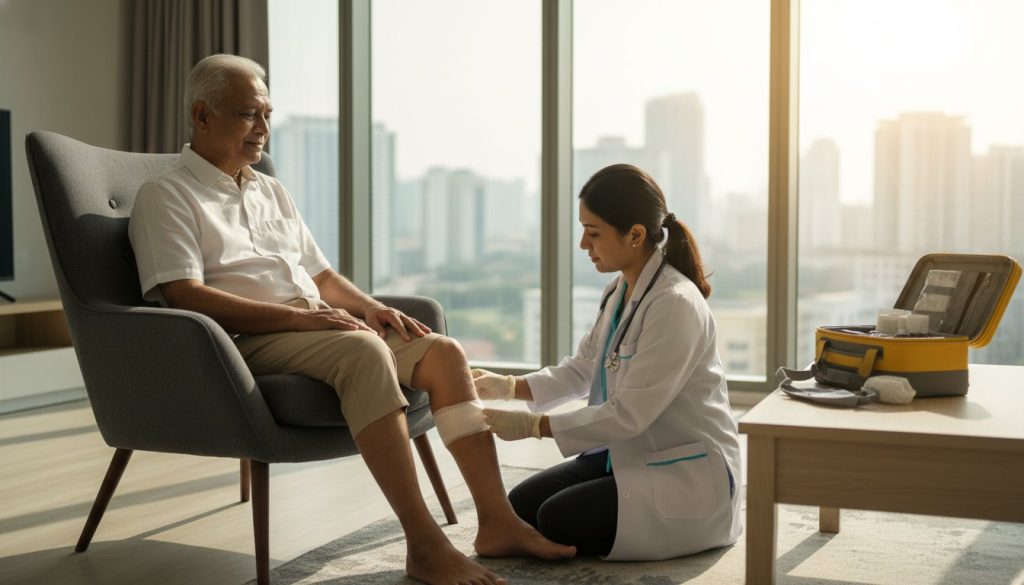

Imagine it is 4:00 PM on a rainy Tuesday in Petaling Jaya. You are staring at a surgical incision that needs changing, but the thought of navigating the gridlock on the LDP with a mobility-impaired parent makes your heart sink. You want the best recovery possible, yet the fear of causing unnecessary pain or choosing the wrong wound dressing often feels like an impossible hurdle. It is a struggle many families face, especially when the high humidity of the Klang Valley complicates the healing process.
We agree that your home should be your clinic, a place where professional standards meet domestic comfort. This guide empowers you to master the essentials of wound management, from selecting the right moisture-wicking materials to following a sterile, step-by-step application technique tailored for our local climate. You will gain the confidence to maintain a clean healing environment and learn the specific clinical red flags that signal it is time to skip the traffic and request a professional house call instead. We are here to ensure your health journey remains seamless and supported right where you feel safest.
Key Takeaways
- Discover why the “Moist Wound Healing” principle is the modern gold standard for faster recovery in Malaysia’s climate, debunking the myth of letting wounds “air out.”
- Learn the step-by-step professional method for applying a wound dressing at home, from ensuring sterile preparation to using the right cleaning solutions.
- Gain clarity on choosing the right materials, such as Hydrogels for moisture or Alginates for drainage, to suit your specific injury type and healing stage.
- Master essential “off-loading” techniques to protect vulnerable areas, ensuring better management of diabetic foot ulcers and bedsores in a home setting.
- Recognize the vital indicators that signal when it is time to transition from home care to expert medical intervention from professional providers in KL and Selangor.
Understanding Wound Dressing: More Than Just a Protective Layer
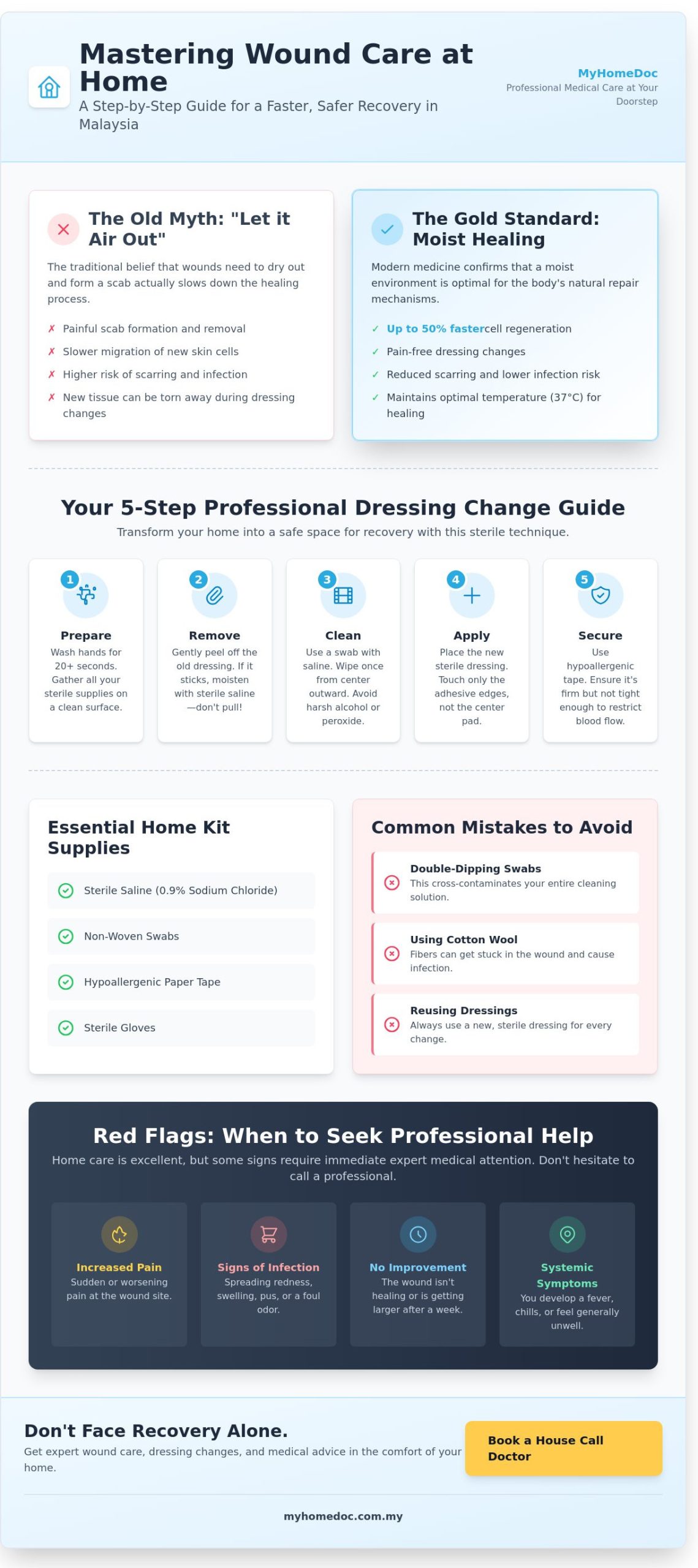
A wound dressing is more than a simple cover for your incision. It’s a sterile barrier that actively promotes recovery by maintaining a precise moisture balance. You might remember older relatives advising you to let a cut “air out” to form a scab, but in 2026, medical science confirms that moist wound healing is the gold standard. Keeping the site hydrated allows cells to migrate across the wound bed up to 50% faster than dry environments.
Your body follows a structured four-stage recovery plan during the healing process:
- Hemostasis: Your body acts immediately to stop any bleeding.
- Inflammation: White blood cells clear out bacteria and debris.
- Proliferation: New tissue and blood vessels begin to fill the wound space.
- Maturation: The wound fully closes and the new tissue gains strength over several months.
Exudate is the natural fluid that leaks from your wound during these stages; managing it is vital for KL residents because our 80% average humidity can prevent this fluid from evaporating, which increases infection risks.
The Role of a Dressing in the Healing Process
Your home is comfortable, but it isn’t a sterile operating theater. A proper dressing blocks common domestic bacteria while providing essential thermal insulation. Maintaining the wound at a steady body temperature of 37°C optimizes cellular repair and enzyme activity. In Selangor, where sweat is a daily reality, you’ll need to monitor for maceration. This happens when the skin around the wound stays too wet, turning white and soft, which can stall your progress and weaken healthy skin.
Traditional Gauze vs. Modern Occlusive Dressings
Traditional dry gauze often sticks to the wound bed. When you pull it off, you risk tearing away the fragile new tissue you’ve just grown, which can be painful and set back your timeline. Modern occlusive or “smart” dressings are different. They interact with the wound environment to absorb excess fluid while keeping the surface optimally hydrated. Using the right wound dressing ensures that your recovery stays on track without the pain of re-injury during routine changes.
How to Apply a Professional Wound Dressing at Home: A Step-by-Step Guide
Caring for your surgical site doesn’t have to be intimidating. By following a structured routine, you turn your home into a safe space for recovery. First, prepare your environment. Clear a clean surface and wash your hands for at least 20 seconds using antimicrobial soap. Gather your supplies so everything is within reach before you begin the process. This preparation reduces the time the wound is exposed to open air.
Next, gently remove the old bandage. If it sticks to the skin, moisten it with sterile saline rather than pulling. When cleaning the area, avoid harsh antiseptics like undiluted alcohol or hydrogen peroxide, as these can damage fragile new tissue. Instead, use a non-woven swab soaked in saline to wipe the wound in a single motion from the center outward. Understanding how to apply a dressing correctly ensures the site remains moist enough to heal but dry enough to prevent bacterial growth.
When applying the new wound dressing, peel back the packaging carefully. Only touch the edges of the adhesive, keeping the sterile center pad completely untouched. Place it directly over the incision. Finally, secure the edges with hypoallergenic tape. Ensure it’s firm but not tight enough to pinch the skin or restrict blood flow. Checking the skin color around the area is a quick way to ensure circulation remains healthy and unobstructed.
Essential Supplies for Your Home First-Aid Kit
Having the right tools makes the job effortless. Your kit should include sterile saline (0.9% sodium chloride), non-woven swabs, hypoallergenic paper tape, and sterile gloves. If you find your supplies are running low or the wound looks more complex than expected, you can book a House Call Doctor Kuala Lumpur to have a professional handle the change for you. It’s a seamless way to ensure your recovery stays on track without the stress of travel.
Common Mistakes to Avoid During Changes
- Double-dipping: Never dip a used swab back into your clean saline container. This mistake cross-contaminates your entire supply of cleaning solution.
- Using cotton wool: These traditional balls leave tiny fibers behind that can get trapped in the healing tissue, leading to irritation or localized infection.
- The “wait and see” approach: If a wound dressing is soaked through with fluid, change it immediately. A saturated environment allows bacteria to multiply 5 times faster than a dry one.
If you’re ever unsure about the appearance of your incision, our team is ready to provide a professional medical consultation in the comfort of your own living room.
Choosing the Right Dressing and When to Seek Professional Wound Care in KL
A Quick Guide to Dressing Classifications
- Hydrocolloids (e.g., Duoderm): These create a moist, insulating environment ideal for minor burns or early-stage pressure sores.
- Foam dressings: These are excellent for high-exudate wounds like leg ulcers, as they absorb fluid without sticking to the wound bed.
- Film dressings (e.g., Tegaderm): These transparent layers are best for superficial surgical sites where you need to monitor the skin clearly.
Red Flags: When to Call MyHomeDoc for a House Call
If you’re in Petaling Jaya or across the Klang Valley, keep a close watch on your recovery timeline. You should seek expert help if you notice a foul odour, spreading redness (cellulitis), or if you develop a fever above 38°C. A wound dressing that’s constantly soaked through also indicates a need for clinical adjustment. Any wound that shows no visible improvement after 14 days requires a professional assessment to prevent chronic complications. Don’t risk your safety with unnecessary travel when you’re feeling vulnerable. Book a professional wound care assessment at home in the Klang Valley and let our innovative caretakers bring the clinic to you.
Take Charge of Your Healing Journey at Home
Effective recovery starts with the right technique and the correct materials. By following clinical hygiene protocols and monitoring for signs of infection like increased redness, you can improve healing outcomes and prevent unnecessary hospital readmissions. Choosing the appropriate wound dressing is essential for managing moisture and protecting new tissue, particularly for the 1 in 5 Malaysian adults living with diabetes who require extra vigilance during recovery — especially those managing a diabetic foot ulcer at home. You don’t need to handle these medical complexities on your own. MyHomeDoc bridges the gap between hospital-grade expertise and the comfort of your own bedroom. Our team of qualified GPs and Nurses provides specialized care across the Klang Valley, ensuring that professional medical assistance is always within reach. We are available 24/7 to manage everything from routine changes to specialized post-surgical care. This integrated approach means you can skip the long hospital queues and focus entirely on getting better. Your home is your clinic, and your health is our priority.
Book Professional Wound Care at Your Doorstep in KL & Selangor
You deserve a recovery process that’s as seamless as it is safe. Let’s start your collaborative journey toward better health today.
Frequently Asked Questions
How often should I change a wound dressing at home?
You should typically change your wound dressing every 24 to 48 hours or as specifically directed by your surgeon. In Malaysia, clinical protocols suggest monitoring for strike-through, which occurs when fluid reaches the outer layer of the pad. If you notice more than 50% of the material is saturated, it’s time for a fresh one to keep the site sterile and dry. This helps your recovery feel effortless and secure.
Is it normal for a wound to smell when I change the dressing?
A faint, slightly metallic odor is common during the first 3 to 5 days of healing, but a strong, foul smell often indicates an infection. According to the Ministry of Health Malaysia, persistent odors accompanied by yellow discharge or localized heat require immediate medical attention. You can use your smart kit for a seamless consultation with our doctors if the scent becomes noticeably unpleasant. We’re here to guide you through every step.
Can I shower with a wound dressing on?
You can shower only if your surgeon has applied a waterproof wound dressing or if the incision has been closed for at least 48 hours. Most standard gauze pads aren’t water-resistant and lose their integrity when wet. If your dressing isn’t waterproof, cover it with a plastic shield or tape a clean bag over the area. This keeps the site dry and ensures your home remains the safest place for recovery.
What should I do if the dressing is stuck to the wound?
If your dressing is stuck, soak it gently with sterile saline or cooled boiled water for 2 to 3 minutes until it loosens. Never pull forcefully, as this can tear the delicate 2 millimeter layer of new tissue forming over the incision. If it remains stubborn after two attempts, reach out for a quick check-up. It’s important that your healing journey is smooth and integrated into your daily life without any unnecessary pain.