Comfort, Dignity, and Medical Support — At Home
Recently, our medical team was called to attend to a lady in her 60s who had been diagnosed with advanced gynaecological cancer. After careful consideration, she chose to be discharged from the hospital and return home, as she felt more comfortable and at peace in her own environment.
Her family reached out to us to provide professional palliative care at home, focusing on comfort, symptom relief, and dignity.
Managing a Serious Infection (Sepsis) at Home
When our team arrived, we noted that she was suffering from sepsis, a serious body-wide infection. Blood tests showed a very high inflammatory marker (CRP level of 180), indicating significant infection.
What We Did:
- Blood samples were taken for culture and sensitivity testing to identify the infection
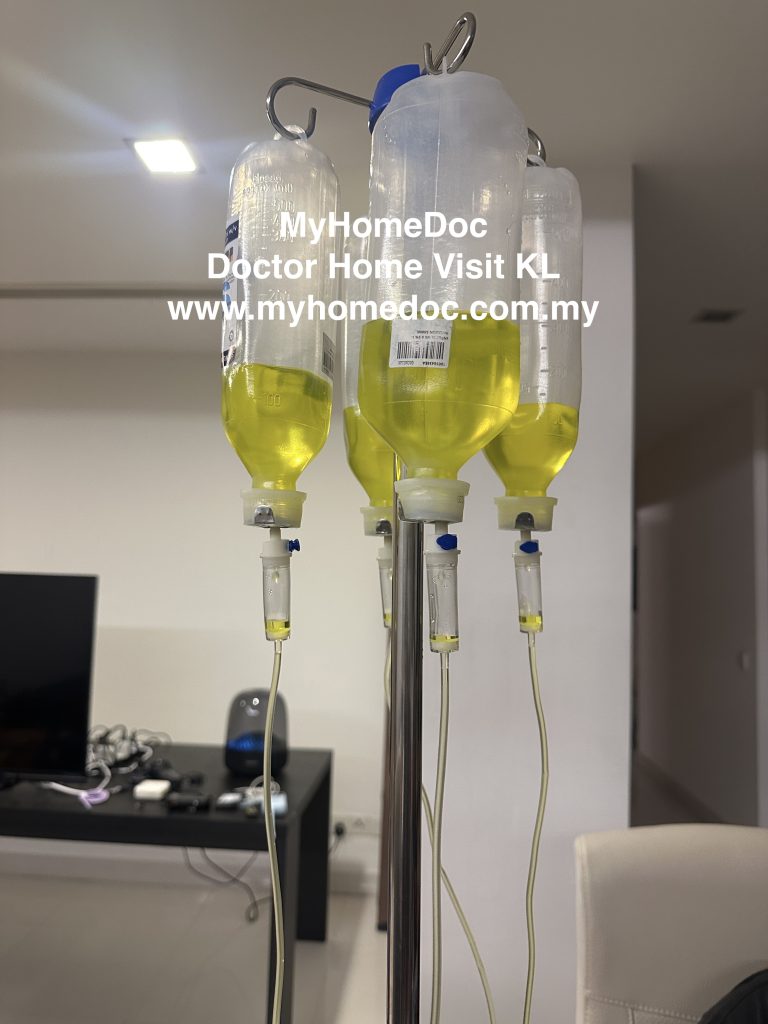
- Broad-spectrum intravenous antibiotics were started immediately
- Close daily monitoring was provided at home
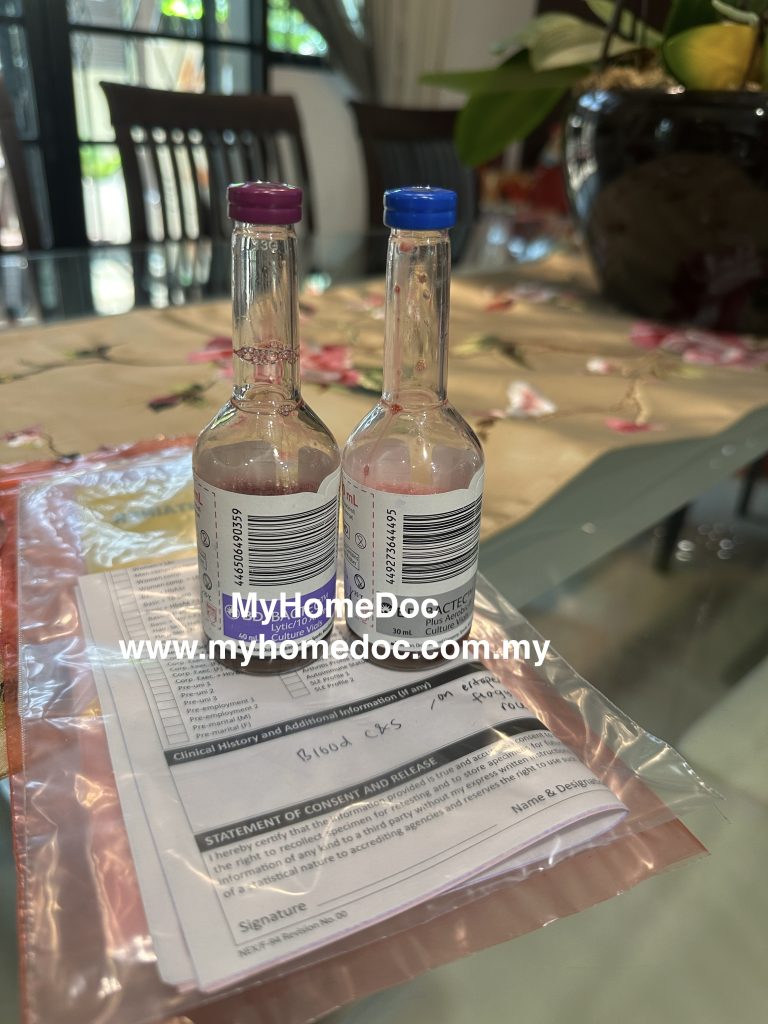
Blood sample taken for culture testing to find out which bacteria is causing the infection and which antibiotic works best. Test was done under standard aseptic technique.
The Result:
After 3 days of treatment, her CRP level dropped from 180 to 80, showing clear improvement. More importantly, she became clinically better — more alert, more comfortable, and less unwell.
This demonstrates that with proper medical expertise, serious infections can be safely and effectively managed at home in selected palliative patients.
Relief from Painful Abdominal Fluid (Ascites)
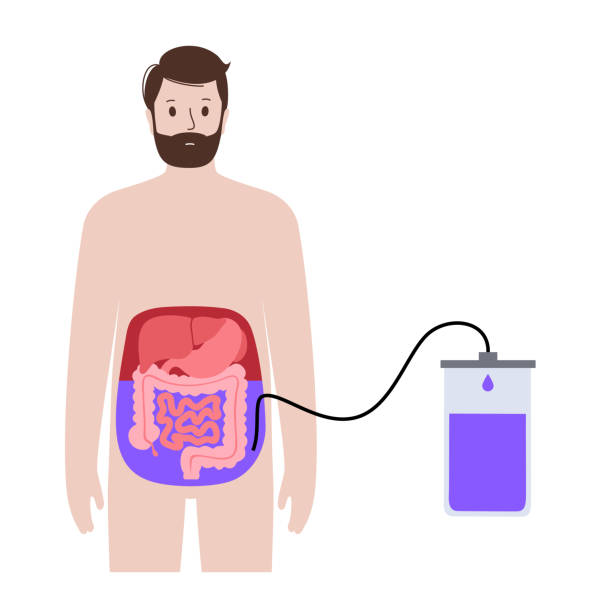
In addition to the infection, she was experiencing symptomatic ascites — a condition where fluid accumulates in the abdomen, commonly seen in advanced cancer. This can cause:
- Abdominal tightness and pain
- Shortness of breath
- Poor appetite
- Difficulty moving or resting
Home Peritoneal Tapping (Ascitic Drainage)
To relieve her discomfort, we performed peritoneal tapping at home, a procedure where excess fluid is safely drained from the abdomen.
- 2 litres of ascitic fluid were drained
- The procedure was done gently, safely, and comfortably at home
- All Aseptic technique were carried out to prevent any infection
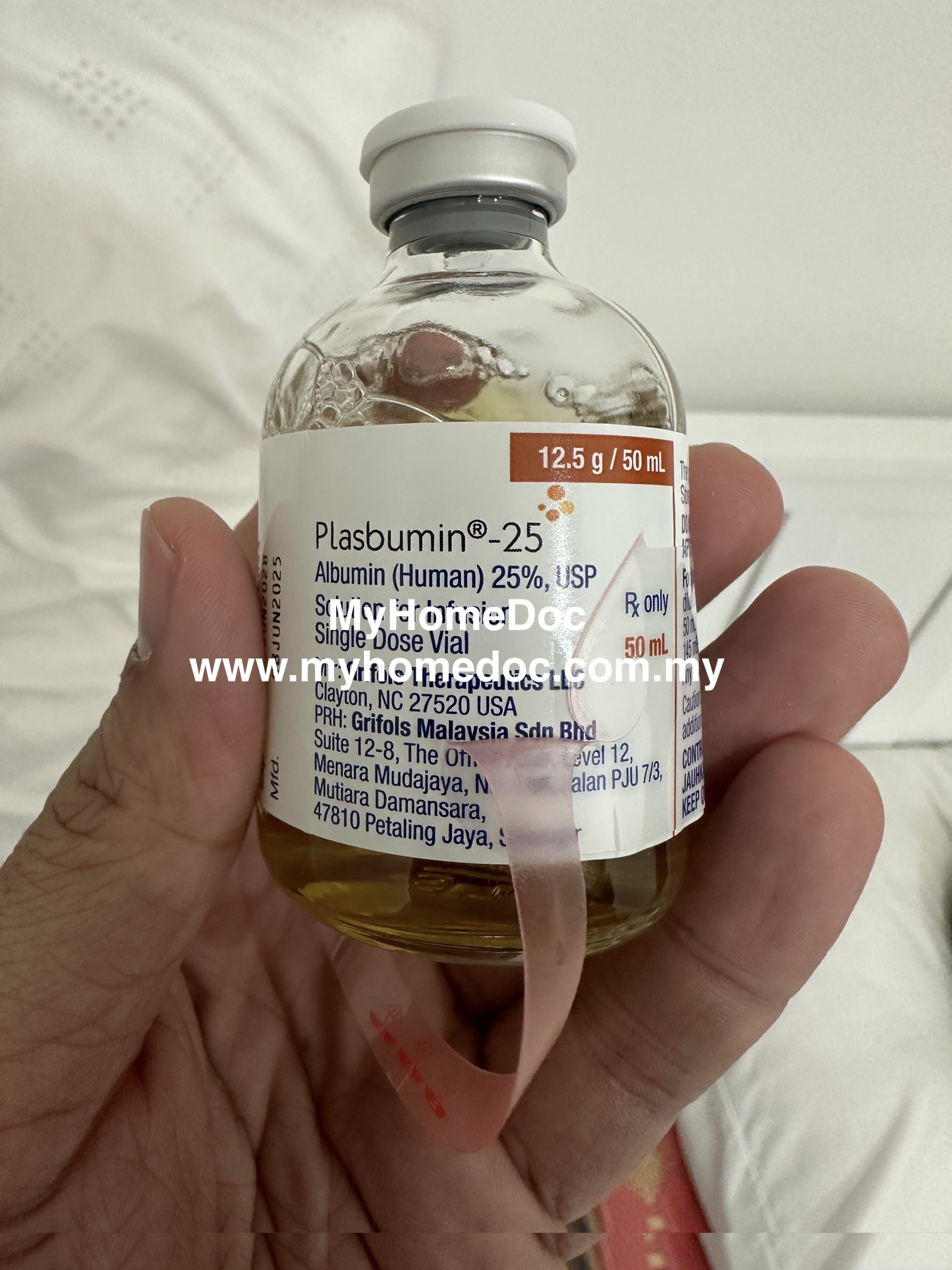
- Intravenous human albumin was administered afterward to maintain blood pressure and circulation
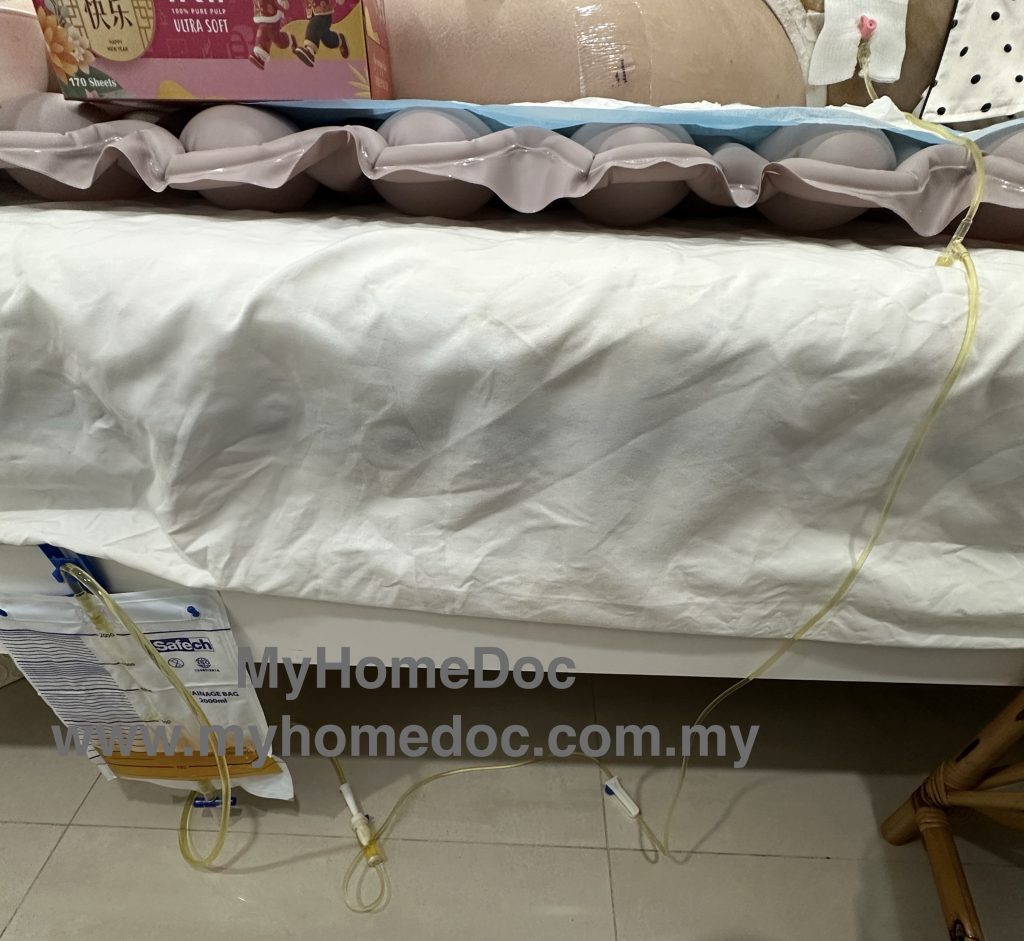
Ascitic fluid being drained out from the abdomen (stomach)
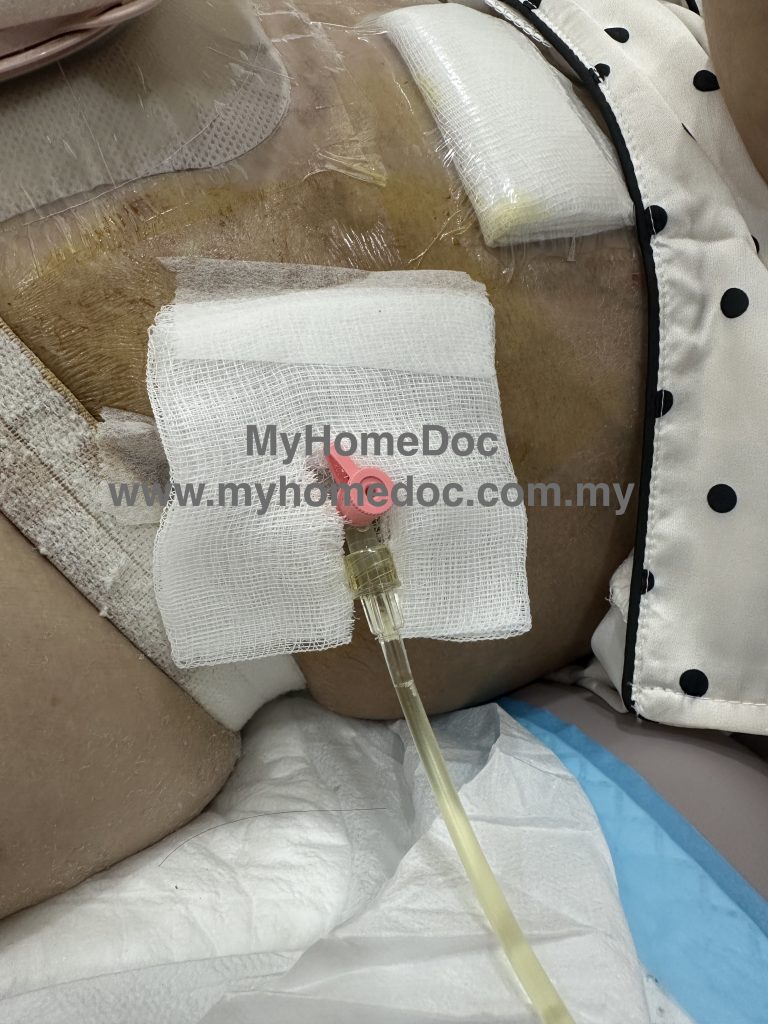
Ascitic fluid being drained out from the abdomen (stomach)
Immediate Improvement:
Following the procedure, she reported significant relief, feeling lighter, less breathless, and much more comfortable.
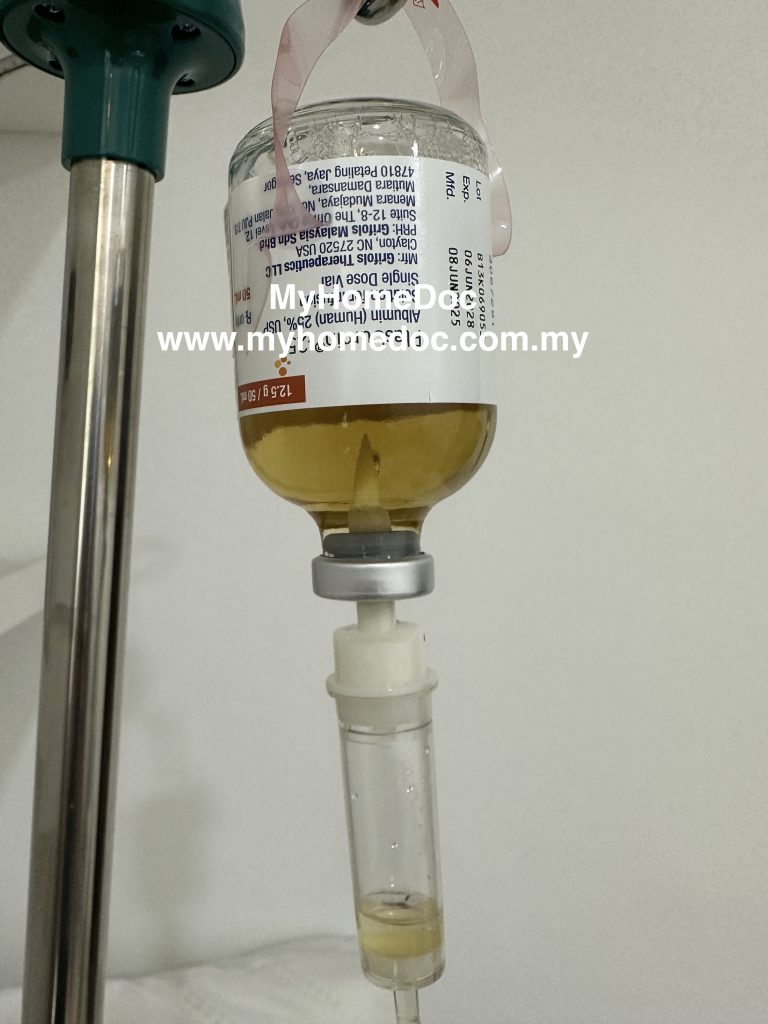
Human albumin was administered afterward to maintain blood pressure and circulation
Why Home Palliative Care Matters
Palliative care is not about giving up — it is about prioritising comfort, quality of life, and patient wishes.
Home palliative care allows patients to:
- Stay in a familiar, comforting environment
- Avoid repeated hospital admissions
- Receive personalised medical attention
- Be surrounded by loved ones
With the right medical team, many complex treatments — including IV antibiotics, blood tests, fluid drainage, and symptom control — can be safely provided at home.
Our Commitment to Patient-Centred Care
Every patient’s journey is unique. Our approach to palliative care is:
- Compassionate
- Medically sound
- Respectful of patient autonomy
- Focused on comfort and dignity
In this case, timely intervention, careful monitoring, and home-based procedures allowed our patient to feel better, more comfortable, and supported during a very challenging time.
Looking for Professional Home Palliative Care?
If you or your loved one requires:
- Home palliative care
- Cancer care at home
- Symptom relief for advanced illness
- Medical home visits
- Infection management at home
Our experienced medical team is here to help.
📞 Contact us today to discuss how we can support you at home, where comfort matters most.