Introduction
Bedsores (also known as pressure sores) are common in elderly patients who are bed-bound, especially after conditions like stroke. These wounds can become serious if not treated properly.
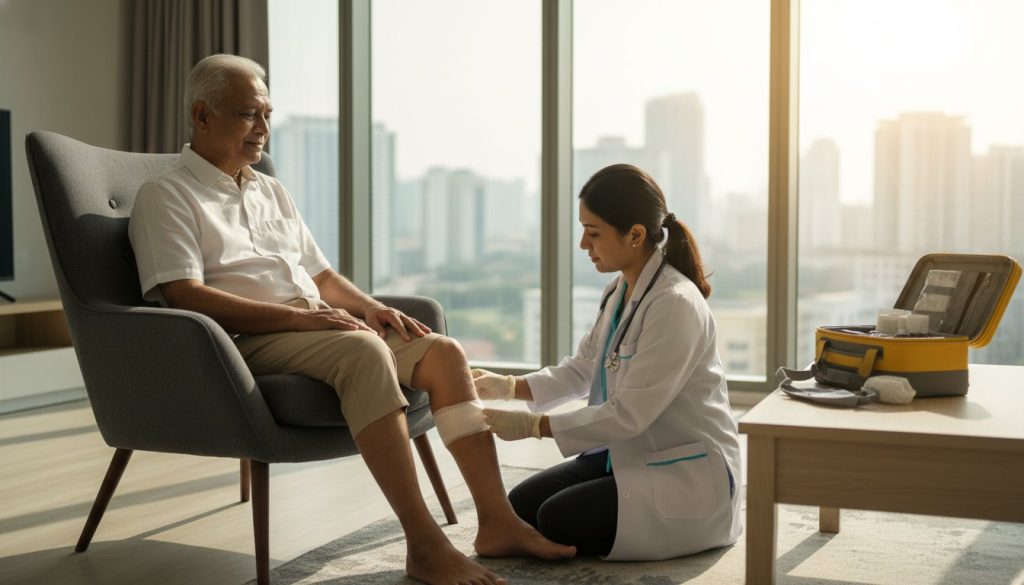
Recently, we treated an 89-year-old gentleman who was bed-bound and developed a bedsore over his lower back (sacral area). The wound had dead tissue and required cleaning. His family requested for the treatment to be done at home for convenience, so he would not need to be moved to a clinic or hospital.
This article shares how bedsores can be treated safely at home with proper care.
What is a Bedsore?
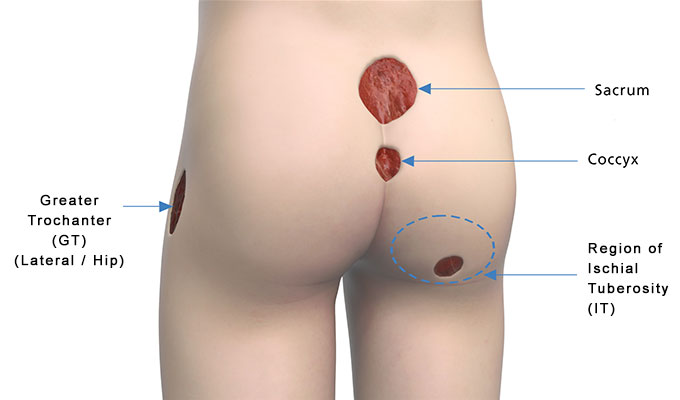
A bedsore happens when there is constant pressure on one part of the body, especially in patients who cannot move much.
Common areas include:
- Lower back (sacrum)
- Hips
- Heels
If not treated early, the skin can break down and form an open wound.
The Patient’s Condition
The patient was an elderly gentleman who had a stroke and was unable to move on his own.
He developed a bedsore over the lower back that showed:
- Black dead tissue (necrosis)
- Yellowish material (slough)
- Moist and fragile surrounding skin
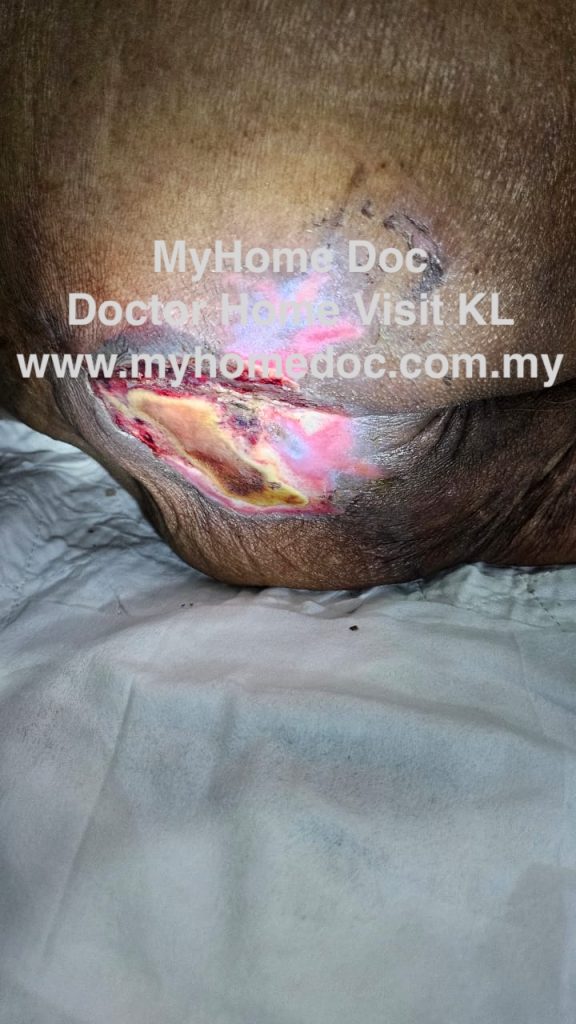
A severe bedsore in a bed-bound elderly patient. The family requested home-based wound care for comfort and convenience. Our team provided professional assessment and management at home to support healing.
These signs mean the wound is not healing properly and needs medical treatment.
Why Was Treatment Done at Home?
The patient’s family preferred home treatment because:
- It was more convenient
- The patient was too weak to travel
- Moving him could cause pain and discomfort
- It allowed him to stay in a familiar environment
Home wound care is often the best option for elderly, bed-bound patients when done by trained professionals.
What is Wound Cleaning (Debridement)?
When a wound has dead tissue, it must be removed. This process is called debridement.
Removing dead tissue helps:
- The wound heal faster
- Reduce the risk of infection
- Allow healthy tissue to grow
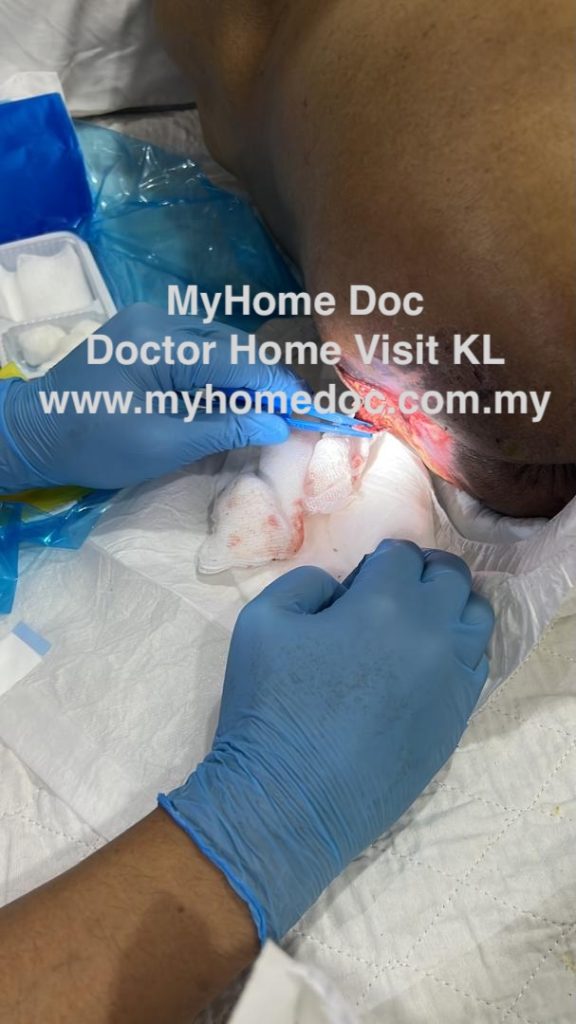
In this case, the dead tissue was carefully removed during a home visit using proper medical techniques.
How the Procedure Was Done
The treatment was carried out safely at home.
Steps included:
- Checking the wound
- Preparing clean and sterile equipment
- Gently removing dead tissue
- Cleaning the wound
- Applying the correct dressing
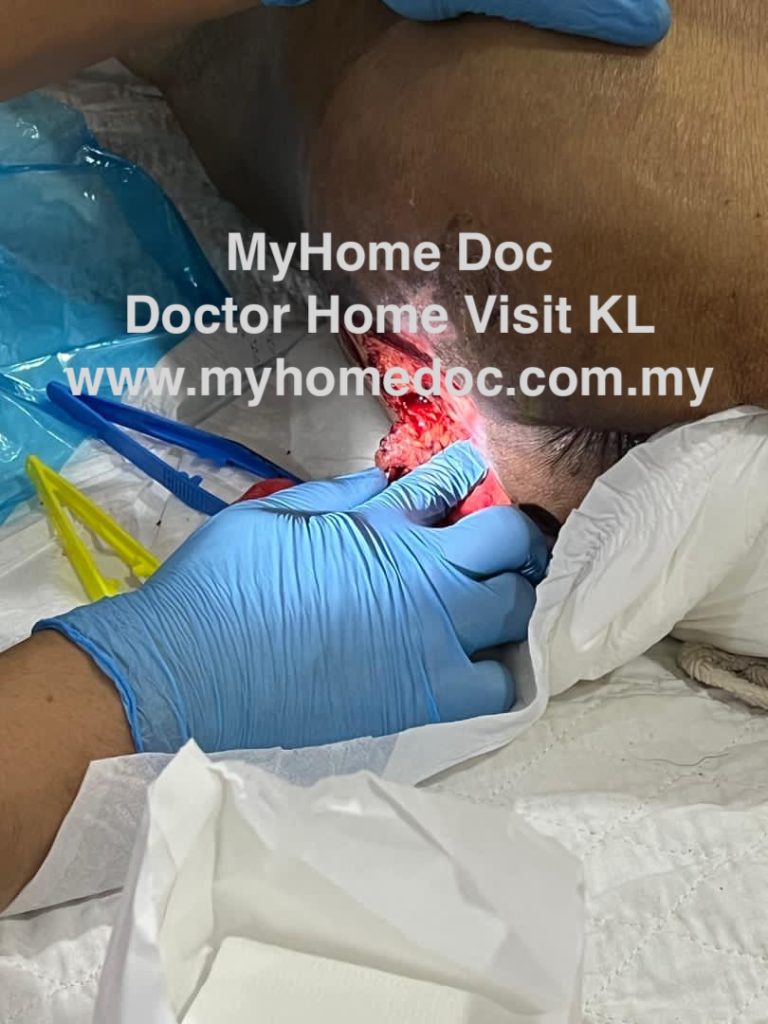
Care was taken to keep the patient comfortable throughout.
Importance of Proper Dressing
After cleaning the wound, the right dressing is very important.
Good dressings help to:
- Keep the wound moist (not too dry or too wet)
- Absorb fluids
- Protect from infection
Dressings need to be changed regularly based on the wound condition.
The Result
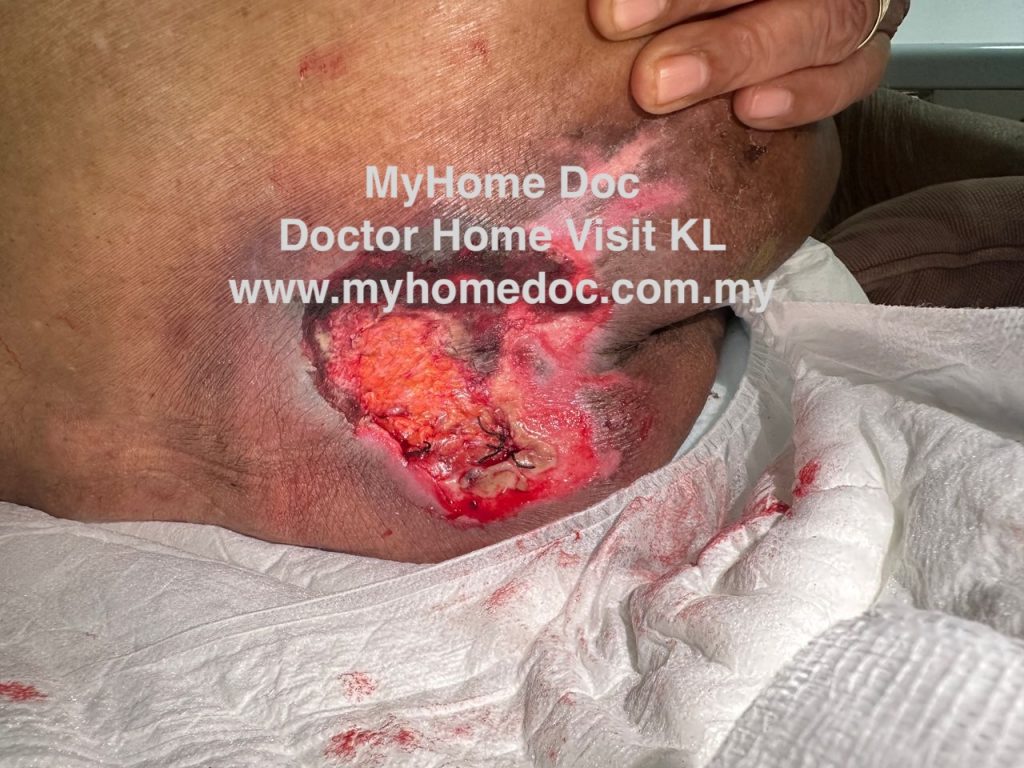
Dead tissue was removed, and healthy pink tissue can now be seen. There is no bad smell or infection, and the wound has been properly cleaned and dressed to help healing.
Professional home wound care can make a difference. Dead tissue removed, healthy tissue exposed, no signs of infection, and proper dressing applied—all in the comfort of the patient’s home.
Preventing Bedsores from Getting Worse
Treatment alone is not enough. Prevention is very important.
Caregivers should:
- Turn the patient every 2 hours
- Use special mattresses or cushions
- Keep the skin clean and dry
- Check the skin daily
Nutrition is Important
Good nutrition helps wounds heal faster.
Patients should have:
- Enough protein (eggs, meat, milk)
- Vitamins (especially Vitamin C)
- Plenty of fluids
Poor nutrition can slow down healing.
When Should You Get Professional Help?
You should seek medical help if:
- The wound has dead tissue or yellow material
- The wound is getting bigger
- There is bad smell, pus, or redness
- The patient has other health problems
Early treatment can prevent serious complications.
Benefits of Home Wound Care
Home wound care services provide:
- Comfort for the patient
- Convenience for family members
- Less need for hospital visits
- Personalized care
For bed-bound patients, this is often the safest and most comfortable option.
Conclusion
Bedsores can become serious if not treated properly, especially in elderly patients. However, with proper care, including removal of dead tissue, correct dressing, pressure relief, and good nutrition, healing is possible.
This case also shows how home treatment, requested by the family for convenience, can be a safe and effective option when managed by a trained healthcare professional.
Need Wound Care at Home in KL?
If you or your loved one needs professional wound care, burn dressing or doctor home visit in KL & Selangor, our team is ready to help you.
Contact us via WhatsApp for fast response and same-day visit.