Imagine checking on your parent in your Cheras home on a Tuesday morning and noticing a persistent red patch on their lower back. You know the clinic is only 8 kilometers away, but with the 2026 Kuala Lumpur traffic congestion, that trip could take 90 minutes of painful movement for your loved one. It’s a moment of pure anxiety where you wonder if you can safely manage bedsore treatment at home or if you’re risking a severe infection. We understand that being a caregiver is a journey of love, but the pressure of wound management can feel heavy when you’re doing it alone.
You deserve to feel confident and supported in your own living room, knowing your home is your clinic. This guide will teach you how to effectively manage wound care and identify the exact signs that require professional medical intervention in the Klang Valley. We’ll walk through essential dressing techniques, key prevention strategies, and how to access clinical expertise without ever leaving your front door.
Key Takeaways
- Identify the early stages of pressure ulcers and understand how Malaysia’s tropical climate impacts skin health and recovery.
- Master the “Golden Rule” of bedsore treatment at home by using strategic positioning to eliminate pressure on the tailbone and heels.
- Learn effective hygiene techniques to manage moisture and prevent skin maceration in the high-humidity environment of the Klang Valley.
- Recognize the critical “Red Flags” that indicate when your loved one needs professional debridement or expert clinical intervention.
- Discover how to bridge the gap between home care and professional medical expertise to ensure a safer, more comfortable healing journey.
Recognising Bedsores: Staging and Symptoms for Home Caregivers in KL
Caring for a bed-bound loved one in the Klang Valley means balancing domestic comfort with clinical vigilance. Bedsores, also known as pressure ulcers, are localized damage to the skin and underlying tissue. In a Malaysian home-care setting, these injuries often stem from prolonged pressure, friction, or shear against bedding and chair surfaces. Pressure-induced skin injuries that require immediate offloading and clinical assessment to prevent deep-tissue necrosis.
Early detection is your most powerful tool. By understanding the stages of bedsores, you can intervene before a minor irritation turns into a severe complication. Successful bedsore treatment at home starts with knowing exactly what to look for during your daily care routine, ensuring that small changes don’t become big problems.
The Four Stages of Pressure Injuries
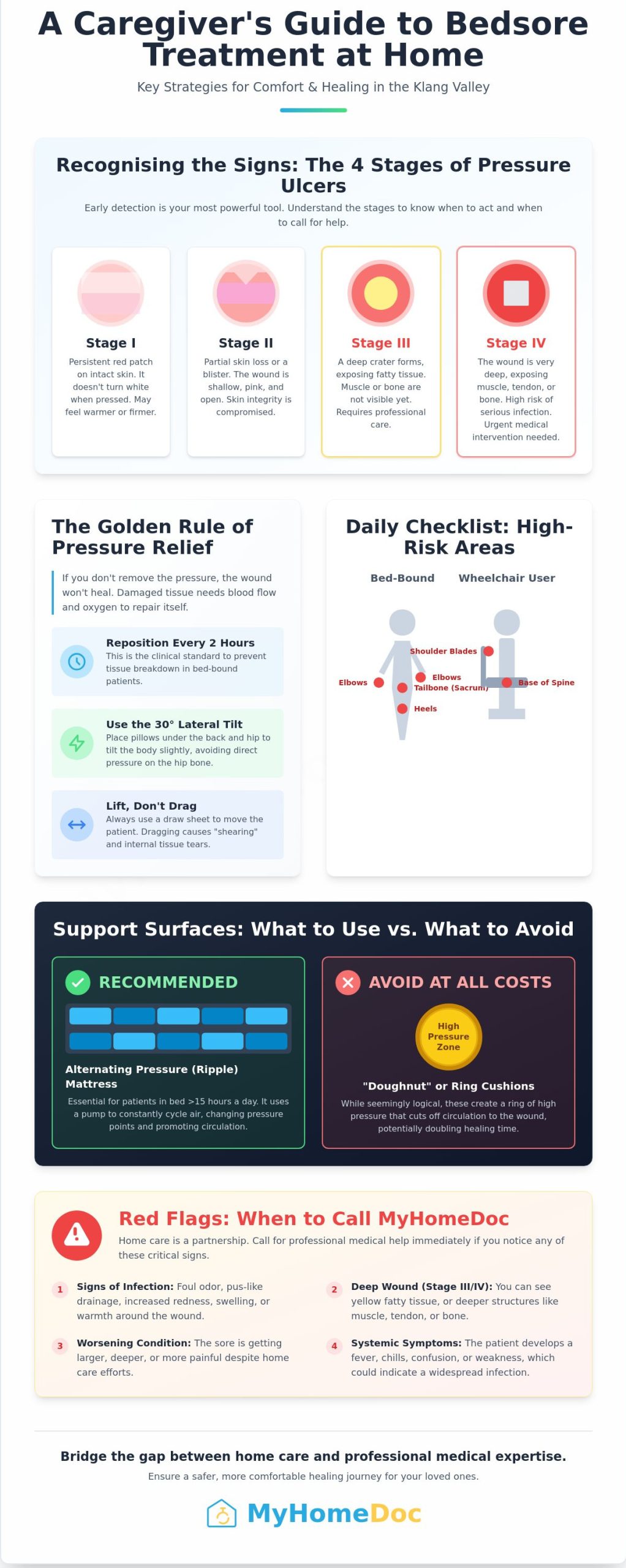
Identifying the severity of an injury helps you decide when to call for professional support. It’s a collaborative journey between you and your healthcare provider. We categorize these injuries into four distinct levels:
- Stage I: You’ll see persistent redness that doesn’t blanch, or turn white, when pressed. The skin is still intact but may feel warmer or firmer than the surrounding area.
- Stage II: This involves partial skin loss or a blister. The wound is shallow and pinkish. It’s a clear signal that the skin’s integrity is failing.
- Stage III and IV: These represent deep craters that involve fat, muscle, or even bone. These stages are serious and require urgent medical house calls to manage tissue health and prevent infection.
Common High-Risk Areas to Check Daily
Gravity and position play a huge role in where injuries form. For bed-bound patients, you should check the tailbone (sacrum), heels, and elbows every single day. If your loved one uses a wheelchair for part of the day, pay close attention to the shoulder blades and the base of the spine. Consistent checks ensure that bedsore treatment at home remains proactive, keeping your family member comfortable and secure in their own environment. Our goal is to make clinical monitoring feel like a natural, integrated part of your day.
Core Principles of Bedsore Treatment at Home: Pressure Relief
Effective bedsore treatment at home starts with a single, non-negotiable rule: if you don’t remove the pressure, the wound won’t heal. Damaged tissue requires consistent blood flow and oxygen to repair itself. When a patient remains in one position, the weight of their body cuts off this vital supply. You don’t always need an expensive RM5,000 hospital bed to start effective care. While high-end equipment is helpful, you can begin protecting your loved one immediately using simple foam wedges and pillows to “float” the heels and offload weight from the tailbone.
Repositioning Techniques and Schedules
Repositioning every two hours is the clinical standard for preventing further tissue breakdown in bed-bound patients. To avoid putting direct pressure on the hip bone, use a 30-degree lateral tilt. This involves placing pillows under the back and hip to tilt the body slightly rather than turning them fully onto their side. These core principles of bedsore treatment ensure that no single bony prominence bears the brunt of the body’s weight for too long. Always use a draw sheet or a sliding mat to move the patient. Sliding them prevents “shearing,” which happens when the skin sticks to the sheet while the bone moves, causing internal tissue tears.
Support Surfaces: Mattresses and Cushions
When a patient spends more than 15 hours a day in bed, a standard mattress is rarely enough. You might need to invest in an alternating pressure air mattress, commonly known in Malaysia as a ripple mattress. These systems use a motorized pump to cycle air through different chambers, constantly changing the pressure points under the body. However, be careful with the accessories you choose. You must avoid “doughnut” or ring-shaped cushions at all costs. While they seem logical for a tailbone wound, they actually create a ring of high pressure that cuts off circulation to the wound site, potentially doubling the healing time. For a more integrated approach to recovery, you can connect with a professional medical provider to assess which support surface fits your home setup.
Wound Care and Hygiene in Malaysia’s Tropical Climate
Managing a bed-bound loved one in Selangor’s 80% average humidity requires constant vigilance. High moisture levels from sweat and ambient humidity increase the risk of maceration, where skin becomes soft, white, and easily damaged. Effective bedsore treatment at home begins with moisture control. You should keep the skin clean and dry using pH-balanced cleansers instead of harsh soaps that strip natural oils. Nutrition also plays a vital role in recovery. A diet high in protein and adequate hydration provide the essential building blocks for skin repair. If you’re unsure about dietary requirements, a house call doctor kuala lumpur can assess nutritional needs and design a recovery plan right in your living room.
Cleaning and Dressing the Wound
Gently irrigate the wound with normal saline to remove debris. You should avoid using hydrogen peroxide or iodine on healthy tissue because these substances can delay healing by damaging new cells. Following established bedsore treatment guidelines ensures you protect the delicate repair process. Choose a dressing based on the wound’s drainage level:
- Hydrocolloids: These are best for dry or slightly damp wounds.
- Foam dressings: These are ideal for wounds with heavy drainage or exudate.
- Transparent films: Use these primarily for early-stage protection and monitoring.
Preventing Infection in KL’s Heat
Heat accelerates bacterial growth, making infection a constant threat. Patients living in areas like Seri Kembangan or Ampang need well-ventilated rooms or air conditioning to reduce skin moisture. Watch for signs of infection such as a foul odor, increased heat around the site, pus, or spreading redness. Consistent monitoring is the best way to manage bedsore treatment at home successfully. If you notice these symptoms, it’s time to seek professional intervention to prevent complications like cellulitis or sepsis.
Ensure your loved one receives the best care possible by booking a professional home medical consultation today.
Professional Wound Management: When to Call MyHomeDoc
Managing a wound at home requires constant vigilance. While many minor irritations resolve with proper positioning, certain signs indicate that bedsore treatment at home needs a professional touch. You should contact a medical professional immediately if your loved one develops a fever over 38°C, shows sudden lethargy, or if the wound remains unchanged after 48 hours of consistent care. These symptoms often signal a deep-tissue infection that requires clinical intervention.
One of the most vital services we provide is professional debridement. This process involves removing dead or infected tissue to jumpstart the body’s natural healing process. It’s a delicate procedure that caregivers shouldn’t attempt alone. MyHomeDoc brings hospital-grade equipment to your residence in Puchong, PJ, and the wider Klang Valley. We believe your home is the best place for recovery, so we bring the clinic to you, reducing the physical and emotional stress of hospital trips.
Our Home Nursing and Doctor Services
Our specialists focus on complex Stage III and IV ulcers that need advanced dressing techniques. We also provide expert diabetic foot ulcer care, which is essential for patients with compromised circulation. To ensure a comprehensive recovery, our mobile laboratory services allow us to conduct blood tests and screenings on-site. We check for systemic infections or nutritional gaps that might be slowing down the healing process, giving you a clear, data-driven path to wellness.
Booking Your Home Visit in the Klang Valley
Securing a professional assessment is a straightforward process designed for busy families. You can arrange a visit through MyHomeDoc to have a qualified doctor arrive at your doorstep. Our “home-first” philosophy ensures your loved one stays in a familiar, comfortable environment during their bedsore treatment at home. By choosing a mobile service, you bypass long hospital queues and transport hurdles, making high-quality healthcare a seamless part of your daily routine.
Your Partner in Professional Home Healing
Managing recovery requires a proactive approach. You’ve learned how to identify staging symptoms and manage the unique challenges of Malaysia’s high humidity. Consistent pressure relief and sterile wound hygiene are the foundations of effective bedsore treatment at home. While daily care is a collaborative family journey, advanced stages require clinical precision to prevent serious infections.
Since 2018, MyHomeDoc has supported families across KL and Selangor with specialized medical care that comes to your doorstep. Our team of experienced wound care nurses and doctors provides 24/7 medical attention, ensuring your home remains a sanctuary of recovery. You don’t have to navigate the complexities of advanced wound management alone. We bridge the gap between hospital-grade diagnostics and the comfort of your own bedroom. Let’s make healing a seamless part of your daily life. It’s time to prioritize professional support for a faster, safer recovery. We’re here to guide you every step of the way.
Book a Professional Wound Care Assessment at Home
Frequently Asked Questions
Can a Stage 1 bedsore be cured at home without a doctor?
Yes, you can successfully treat a Stage 1 bedsore at home by removing all pressure from the affected area immediately. This stage is marked by skin that stays red when pressed but isn’t broken. Clinical data shows that 90% of these early stage sores heal within 72 hours if you reposition the patient every 120 minutes. Keep the skin clean and dry to support your body’s natural healing process.
How often should I change the dressing on a pressure sore?
You should change the dressing every 2 to 3 days, or sooner if fluid leaks from the edges. When managing bedsore treatment at home, check the bandage’s integrity every morning and evening. Some advanced foam dressings can stay in place for 7 days, but if the wound is weeping, daily changes are necessary to keep the surrounding skin from softening and breaking down further.
Is sudocrem or petroleum jelly good for treating bedsores?
Sudocrem is more effective for protecting intact skin, while petroleum jelly is better suited as a simple moisture sealer. Sudocrem contains zinc oxide, which helps soothe inflammation and creates a barrier against sweat or urine. Don’t apply these to open wounds, as they can trap bacteria. In Malaysia, these products are common first line defenses for the 35% of elderly patients at risk of skin breakdown.
How do I know if a bedsore is infected?
You’ll know a bedsore is infected if you see thick green or yellow pus, notice a strong odor, or feel heat around the wound. Redness that spreads more than 2 centimeters from the sore is a major red flag. If the patient develops a fever over 38°C, it’s a sign the infection might be spreading. Monitoring these shifts during bedsore treatment at home helps you catch complications before they turn into emergencies.
What is the best mattress for someone with bedsores in Malaysia?
An alternating pressure ripple mattress is the gold standard for preventing and treating sores in the Malaysian climate. These mattresses use an electric pump to inflate and deflate air cells, ensuring weight shifts even if the patient can’t move. You can find reliable ripple mattress systems at local pharmacies starting from RM150 to RM450, depending on whether you choose a bubble or tubular design for your home setup. If your loved one is also managing diabetes, reviewing a diabetic foot ulcer home management checklist can help you address the additional wound care challenges that come with compromised circulation.