

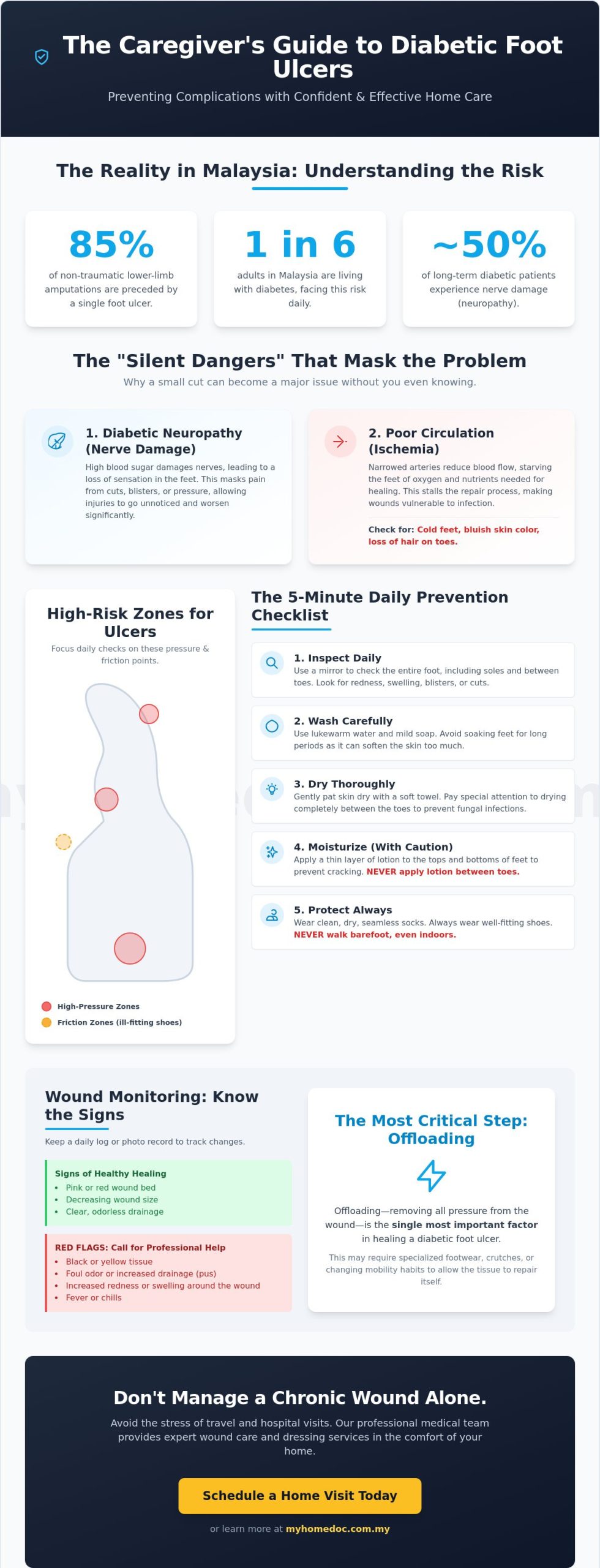
Did you know that 85% of non-traumatic lower-extremity amputations are preceded by a single diabetic foot ulcer? With 1 in 6 adults in Malaysia now living with diabetes, this risk is a reality that many families face every day. You might find yourself staring at a small wound, feeling a heavy mix of confusion and fear. It is stressful to worry about whether you are cleaning a wound correctly or how you will manage the logistics of transporting an elderly parent to a clinic for daily dressings.
We agree that managing a chronic wound at home can feel like an overwhelming burden to carry alone. You want to provide the best care possible while keeping your loved ones in the comfort of their own environment. This guide promises to give you the clinical clarity needed to identify, monitor, and manage a diabetic foot ulcer with confidence. You will learn how to spot early warning signs and follow a professional care routine that encourages healing and prevents infection. We will walk you through a practical checklist designed to simplify home management and help you avoid unnecessary hospital visits.
Key Takeaways
- Learn why nerve damage often masks pain and makes early detection of a diabetic foot ulcer the most important step in preventing complications.
- Discover a five-minute daily inspection routine using simple home tools to catch small skin changes before they become serious health issues.
- Master the skin integrity protocol to keep feet clean and dry, significantly reducing the risk of fungal growth and recurring infections.
- Identify the specific “red flag” symptoms that signal when it’s time to transition from routine home care to professional clinical intervention.
- Understand how professional wound care and dressing services can be delivered in your own home to avoid the stress of hospital transport.
Understanding Diabetic Foot Ulcers: Why Early Detection is Critical
A diabetic foot ulcer is a slow-healing open sore that typically develops on the bottom of the foot. It happens when high blood sugar levels damage blood vessels and nerves over time, stripping away the body’s natural ability to repair itself. In Malaysia, our tropical climate adds a layer of complexity. High humidity can soften the skin and trap moisture, while the common habit of walking barefoot indoors significantly increases the risk of minor injuries that escalate quickly.
This loss of sensation is known as diabetic neuropathy, a condition affecting up to 50% of long-term diabetic patients in Malaysia. It is often called the “Silent Danger” because it masks the pain that would usually alert someone to an injury. Because the nerves aren’t sending signals, a tiny scratch or blister can escalate into a serious infection without your loved one even realizing it. For more clinical context, Understanding Diabetic Foot Ulcers provides a comprehensive look at how these sores develop and why they require such specialized care.
The Role of Poor Circulation (Ischemia)
Narrowed arteries act like a bottleneck, preventing vital oxygen and nutrients from reaching the foot to repair damaged tissue. Without proper blood flow, the healing process stalls, making the diabetic foot ulcer vulnerable to infection. You can spot signs of poor blood flow by checking if their feet feel unusually cold, look blue-ish, or have a noticeable loss of hair on the toes and lower legs. These physical cues are early warnings that the skin’s integrity is at risk.
Common Locations for Ulcers
Pressure is the primary enemy of diabetic skin. Most ulcers appear on high-impact zones like the ball of the foot, the heel, or the tips of the toes where weight is most concentrated during movement. Friction also plays a role. Ill-fitting shoes can create rub points along the sides of the feet or on the tops of toe joints, leading to sores that are difficult to see without a close inspection. Focusing your daily checks on these specific zones allows you to catch changes before they become life-threatening.
The Daily Diabetic Foot Care Checklist for Caregivers
Managing a diabetic foot ulcer at home requires a disciplined daily routine. Your goal is to transform the domestic environment into a safe space for healing. Start with a five-minute inspection. Since many patients can’t easily see the bottom of their feet, use a handheld mirror to check the soles and the tight spaces between the toes. Look for new redness, swelling, or blisters that might have gone unnoticed due to neuropathy. With a recurrence rate as high as 66% after an ulcer has healed, these daily habits are your best defense against future complications.
Skin hygiene follows a strict protocol. Use lukewarm water and mild soap for daily washing. Drying is just as vital as cleaning. Use a soft towel to pat the skin dry, paying extra attention to the areas between the toes to prevent fungal growth. When applying moisturizer, cover the tops and bottoms of the feet to prevent cracks, but never put lotion between the toes. Moisture trapped there can lead to skin breakdown and infection.
Safety extends to what they wear. Ensure your loved one always wears clean, seamless socks to avoid friction. Walking barefoot, even on smooth indoor tiles, is a major risk factor for new injuries. Every step should be protected.
Monitoring Wound Progression
Keep a daily log of how the wound looks. Healthy healing usually shows pink or red tissue. If you notice the tissue turning black or yellow, or if there is a new, foul odor, these are signs of concern. Documenting these changes helps you provide clear information when you request a house call doctor kuala lumpur for a professional assessment. Taking a photo at the same time every day is an excellent way to track progress accurately.
Offloading: Taking the Pressure Off
Healing cannot happen if the wound is constantly crushed by body weight. This is called offloading. It is the single most important factor in closing a diabetic foot ulcer. You may need specialized footwear or a temporary change in mobility habits to keep weight off the affected area. For a deeper understanding of Professional Wound Management, clinical guidelines suggest that reducing pressure is non-negotiable for recovery. If you feel overwhelmed by these daily requirements, consider scheduling a professional wound care and dressing session at home to ensure everything is on track.
Professional Wound Management at Home: When to Call MyHomeDoc
Monitoring a diabetic foot ulcer at home is a vital first step, but you shouldn’t have to carry the medical burden alone. Recognizing when care needs to transition from daily hygiene to clinical intervention is crucial for preventing serious complications. If you notice any of these red flags, it’s time to seek professional help:
- Fever or chills in the patient.
- Foul-smelling discharge or pus from the wound.
- Redness spreading up the foot or leg, which may indicate cellulitis.
- Increased swelling or a wound that looks “boggy” and wet.
Transporting an elderly patient with a mobility-limiting wound to a hospital can be a traumatic and logistical nightmare. MyHomeDoc eliminates this stress by bringing professional wound dressing and clinical oversight directly to your living room. Our GPs perform bedside assessments that include infection management and on-site blood tests to ensure your loved one is stable. If a bone infection, known as osteomyelitis, is suspected, we coordinate the necessary specialist referrals to ensure no time is lost.
Clinical Procedures We Bring to Your Doorstep
Professional debridement is often necessary to stimulate new skin growth. This involves carefully removing dead or infected tissue that prevents the diabetic foot ulcer from closing. Our team provides these sterile home nursing services selangor, ensuring that every dressing change follows strict clinical standards within the comfort of your domestic setting. For families seeking a comprehensive overview of how wound care & dressing at home in Malaysia can be delivered using the latest Ministry of Health aseptic techniques, our professional guide outlines the full scope of what home-based clinical care can achieve. We bridge the gap between complex diagnostics and everyday care, making sure you feel informed and supported.
Booking Your Home Consultation
Requesting a GP or specialist house call in Kuala Lumpur and Selangor is a straightforward process designed for busy caregivers. We focus on continuity of care, which means we don’t just treat the wound; we coordinate with your existing hospital specialists to ensure a unified treatment plan. This collaborative approach provides the security of a hospital-grade service without the need for travel. Our innovative caretaker model ensures that professional medical expertise is always just a call away.
Take Control of the Healing Journey at Home
Managing a diabetic foot ulcer requires a balance of diligent daily care and professional clinical oversight. By sticking to a consistent inspection routine and protecting the skin from pressure, you’re building a strong foundation for recovery. You’ve learned how to spot the early warning signs and when it’s time to transition from home hygiene to expert medical intervention. Your role as a caregiver is vital, but you don’t have to carry the medical burden by yourself.
With over 5 years of home healthcare experience in Malaysia, MyHomeDoc is ready to support your family’s journey. Our qualified GPs and Specialists provide comprehensive bedside blood testing and laboratory investigations to monitor infections accurately. We focus on bringing high-touch medical services into your domestic environment, ensuring your loved one stays safe and comfortable. If you’re ready for expert assistance that prioritizes your home as the primary place of healing, we are here to help.
Book a Professional Home Wound Care Consultation Today. We are committed to providing a steady, reliable presence for your family as you navigate the path to healing together.
Frequently Asked Questions
Can a diabetic foot ulcer heal without surgery?
Yes, many ulcers heal successfully through non-surgical methods if they are caught early and managed with clinical precision. This process involves strict offloading to remove weight from the wound, maintaining stable blood sugar levels, and using professional wound care and dressing techniques. While surgery is sometimes necessary for severe infections or to improve blood flow, a dedicated home care routine often provides the environment needed for the skin to repair itself.
How often should a diabetic foot ulcer dressing be changed?
Dressing changes typically happen daily or every two to three days, depending on how much fluid the wound is producing. A dry wound might need fewer changes, while a heavily draining ulcer requires frequent attention to prevent the surrounding skin from becoming too soft and breaking down. Your house call doctor or nurse will set a specific schedule based on the wound’s progression and the type of advanced dressing being used to manage the moisture.
Is it safe to clean a diabetic wound with hydrogen peroxide at home?
No, you should avoid using hydrogen peroxide or other harsh antiseptics because they can damage the healthy cells trying to heal the wound. These substances are often too aggressive for delicate tissue and can actually delay the recovery process. It’s much safer to use sterile saline or specialized antimicrobial sprays recommended by a healthcare professional to keep the area clean without causing irritation or chemical trauma to the new skin.
What happens if a diabetic foot ulcer is left untreated?
An untreated diabetic foot ulcer can quickly lead to deep-seated infections, including cellulitis or bone infection. Because of the high risk of complications, these wounds precede 85% of non-traumatic lower-extremity amputations. Seeking professional help at the first sign of a red flag is the best way to protect your loved one’s mobility and prevent a local issue from becoming a life-threatening emergency that requires hospitalization.