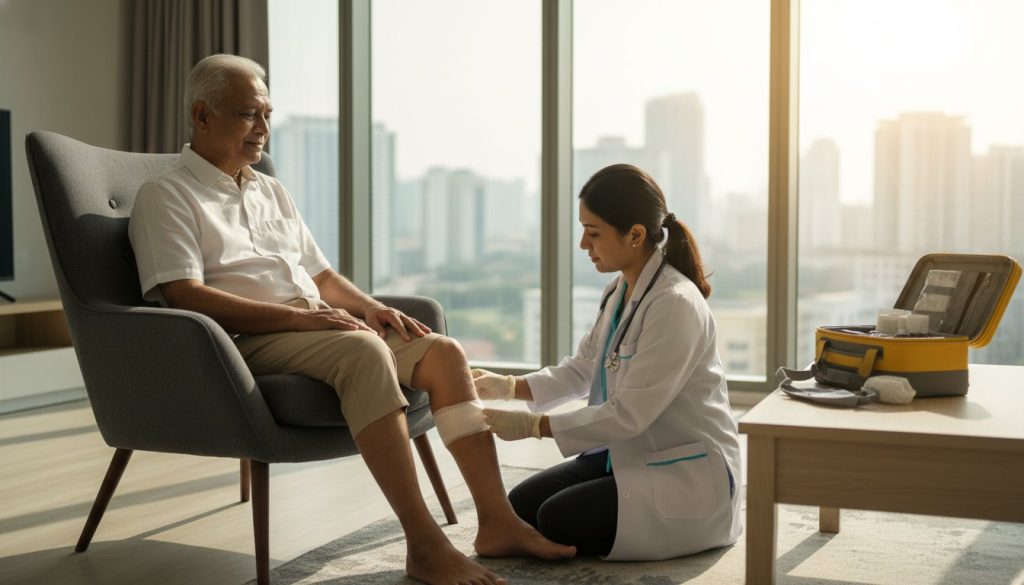
What if the most critical phase of healing doesn’t happen in a hospital ward, but right in your own living room? For many families in Malaysia, the relief of being discharged is quickly replaced by the heavy weight of caregiving and the constant fear of a medical setback. You want your loved one to recover where they feel safest, yet the logistical stress of transporting a weak patient for follow-ups can feel overwhelming. Effective post-hospitalization care is more than just home help; it’s a clinical bridge designed to prevent the “revolving door” of hospital readmissions.
We understand that you’re looking for security and professional monitoring without the sterile hospital environment. You deserve a clear recovery roadmap that replaces caregiver exhaustion with confidence. In this guide, you’ll discover how to choose the right clinical support, from GP house calls to specialized physiotherapy, to ensure a seamless transition. We’ll also cover essential 2026 updates like the RM 10,000 tax relief for medical expenses and how to navigate the latest SST regulations, so you can build a safe, tech-enabled recovery plan in the comfort of home.
Key Takeaways
- Identify why the first 30 days after discharge are a high-risk transition window and how to navigate them safely.
- Learn to evaluate providers using a clinical framework that prioritizes medical oversight and rapid response times.
- Discover how a GP-led approach to post-hospitalization care creates a clinical bridge between the hospital and your home.
- Explore how house call doctors and mobile lab investigations remove the logistical burden of transporting recovering patients.
- Gain a clear roadmap for preventing readmissions through professional monitoring and personalized home recovery plans.
What is Post-Hospitalization Care and Why is the First Month Critical?
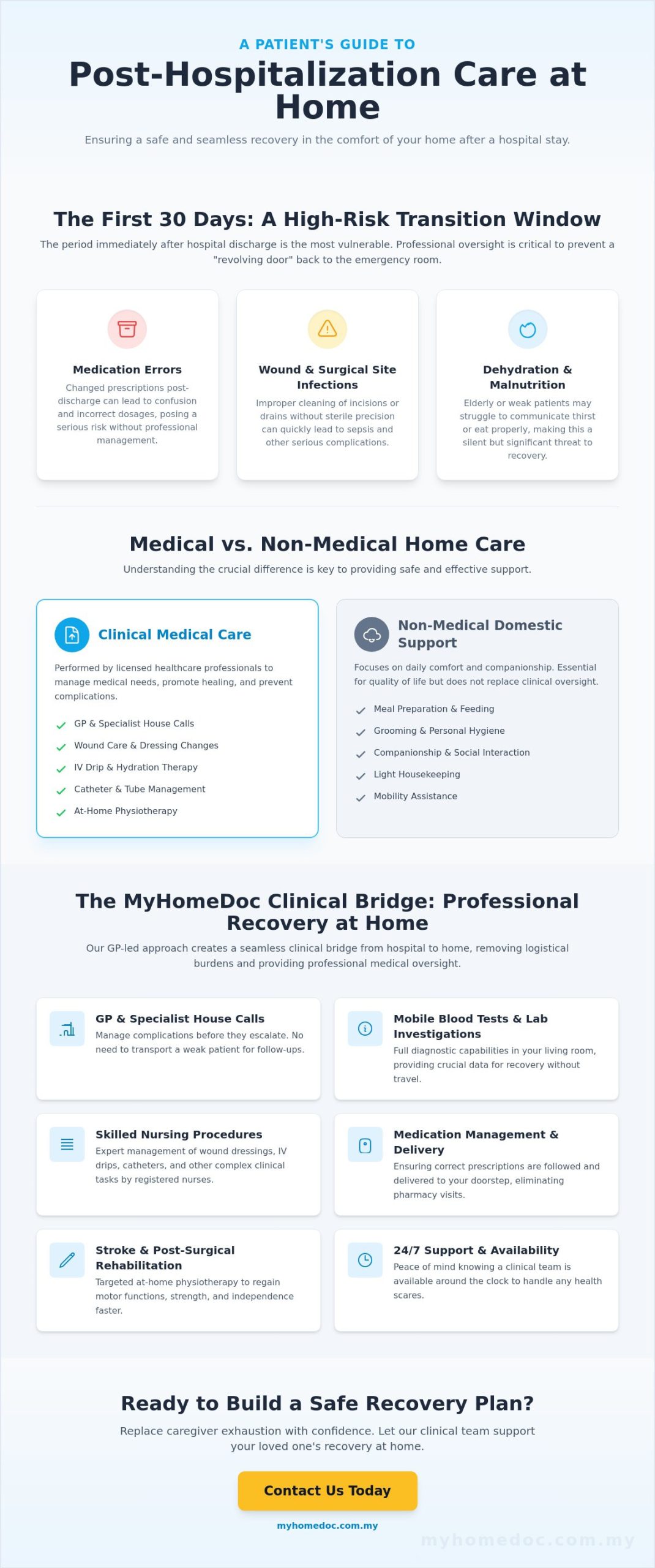
Post-hospitalization care isn’t just about getting home; it’s about staying there. It is a structured, clinically supervised recovery plan that begins the moment a patient leaves the hospital doors. The first 30 days after discharge are often called the “Transition Window.” This period is the most vulnerable time for any patient because the body is still fragile and the intense monitoring of a hospital ward is suddenly gone. Without professional Transitional Care, patients often face hidden dangers that can lead back to the emergency room.
Many families mistake “being home” for “being healed.” In reality, the absence of 24-hour nursing leaves patients exposed to risks that are hard to spot with an untrained eye. Medication errors are common when prescriptions change during discharge. Wound infections can escalate quickly if not cleaned with sterile precision. Even dehydration can become a silent threat, especially for elderly patients who may not communicate their thirst effectively. These hurdles make the first month a high-stakes environment where professional oversight is the best defense.
Medical vs. Non-Medical Home Care: Knowing the Difference
It’s vital to distinguish between domestic support and clinical intervention. A domestic helper or family member can assist with grooming, feeding, and companionship. These are essential for daily comfort but don’t address medical needs. Clinical post-hospitalization care requires licensed professionals to perform tasks like IV Drip Hydration Therapy, Wound Care & Dressing, and catheter management. Relying on family members for these technical duties often leads to profound caregiver exhaustion and increases the chance of medical errors that could have been avoided with a GP House Call.
Common Conditions Requiring Specialized Home Recovery
Certain health journeys require a more rigorous roadmap to ensure a safe outcome. Professional support is particularly crucial for:
- Post-surgical recovery: Managing incisions and drains is the only way to prevent sepsis and ensure internal healing remains on track.
- Stroke rehabilitation: Targeted at-home Physiotherapy is critical during the first few months to help patients regain motor functions and independence.
- Chronic illness flare-ups: Patients with heart failure or COPD need active clinical monitoring to stabilize their breathing and heart rates without returning to a hospital bed.
How to Choose a Post-Hospitalization Care Provider in Malaysia
Choosing the right partner for home recovery is a high-stakes decision. You aren’t just hiring a helper; you’re selecting a clinical team to protect your loved one during their most vulnerable phase. A robust selection framework should prioritize clinical expertise, response time, and a wide service range. While many agencies provide basic caregiving, true post-hospitalization care requires high-level medical oversight. You should always ask potential providers if they offer GP House Calls or Specialist House Calls to manage complications before they require a return to the ward.
Speed matters. If you’re in Kuala Lumpur or Selangor, you need a provider with localized coverage to ensure prompt attention. It’s also vital to check for diagnostic capabilities. Can the team perform Blood Tests & Lab Investigations in your living room? Having these tools available at home prevents the physical stress of transporting a weak patient to a clinic for simple follow-ups. This localized, tech-enabled approach ensures that professional help is always within reach.
Key Criteria for Your Selection Checklist
Safety starts with verification. Your checklist should include:
- Professional Credentials: Ensure all clinical staff are locally registered with the Malaysian Medical Council (MMC) or Lembaga Jururawat Malaysia (LJM).
- Service Breadth: Your provider must handle everything from wound care & dressing to medication delivery and IV drips.
- Availability: Look for teams that offer consistent medical attention, such as 24/7 support, so you never feel alone during a midnight health scare.
The Role of Technology in Modern Home Care
Modern recovery is tech-enabled. Mobile medical teams now carry sophisticated diagnostic tools that bridge the gap between the hospital and the home. According to the WHO on Rehabilitation, access to the right interventions at the right time is crucial for optimizing a patient’s functioning. Digital booking systems and remote monitoring allow for a smoother journey, integrating various at-home health services into one cohesive recovery plan. If you’re ready to secure this level of support, exploring a professional GP house call service is a smart first step toward peace of mind.
The MyHomeDoc Clinical Bridge: Professional Recovery at Home
While traditional agencies often focus on basic caregiving, MyHomeDoc provides a clinical alternative that functions as a high-tech hospital-at-home. We believe your recovery shouldn’t be a solo effort. Our GP-led approach ensures that every medical decision is guided by an expert. When a house call doctor kuala lumpur visits your home, they manage the entire recovery process, from monitoring vitals to adjusting prescriptions. This clinical oversight is the safest way to bridge the gap between the ward and your daily life.
Our service model brings essential hospital functions to your bedside. Whether you need IV Drip Hydration Therapy, vaccinations at home, or comprehensive Blood Tests & Lab Investigations, our mobile teams arrive equipped with the necessary diagnostic tools. We also handle the logistical stress of post-hospitalization care by providing medication delivery and 24/7 support across the Klang Valley. This ensures you have professional expertise available whenever a question or concern arises.
Specialized Nursing and Physiotherapy
Our home nursing services selangor are designed for patients who require more than just companionship. Our licensed nurses handle complex clinical procedures, such as Ryle’s tube silicone changes and sterile wound management, with precision. For those regaining their strength, professional physiotherapy at home focuses on restoring mobility and independence in a familiar environment. We also develop tailored care plans for elderly care and palliative needs, ensuring every family member feels supported and secure.
Starting Your Recovery Journey with MyHomeDoc
Your path to healing starts with a simple, step-by-step transition. We coordinate directly with your hospital specialists to ensure continuity of care, so no detail is lost during discharge. Once you’re settled, the first GP house call establishes a clear recovery roadmap. By conducting home-based diagnostics, we remove the exhaustion of traveling for follow-ups. This seamless integration of technology and human expertise makes your post-hospitalization care a collaborative, stress-free journey toward health.
Secure a Safe Path to Healing at Home
The journey from hospital to home doesn’t have to be a source of constant stress. You now understand that the first 30 days are a critical window where clinical oversight makes all the difference. By choosing a partner that prioritizes medical expertise over simple caregiving, you protect your loved one from avoidable complications. Professional post-hospitalization care transforms your living space into a safe, healing environment where technology and human touch meet.
Since 2018, MyHomeDoc has served families across KL and Selangor with professional GP and Specialist house calls. We bring the clinic directly to your door with comprehensive lab tests and seamless medication delivery. This approach removes the logistical burden of travel, allowing you to focus on what matters most: supporting your family. You don’t have to manage this transition alone. Secure your loved one’s recovery with a MyHomeDoc house call today. We’re here to ensure your recovery journey is steady, safe, and supported every step of the way.
Frequently Asked Questions
Is post-hospitalization care covered by insurance in Malaysia?
Insurance coverage for home-based clinical services depends entirely on your specific policy and provider. Many private medical insurance plans in Malaysia include a “Post-Hospitalisation Benefit” that reimburses nursing care or doctor visits for a set number of days after discharge. You should review your policy’s table of benefits or contact your insurance agent to confirm if GP house calls and home nursing are included. We provide detailed medical reports and invoices to help you facilitate the claims process with your insurer.
How soon can a home nurse or doctor arrive after discharge?
Ideally, you should coordinate your first home visit at least 24 to 48 hours before the patient leaves the hospital. This preparation time allows our clinical team to review the discharge summary and ensure all necessary medical supplies are ready. For families in Kuala Lumpur and Selangor, we strive to provide prompt scheduling to ensure there is no gap in medical oversight. Getting a professional on-site within the first 24 hours of returning home is the best way to prevent early complications.
Can MyHomeDoc provide 24/7 nursing for bed-bound patients?
Yes, we provide 24/7 clinical support for patients who require continuous monitoring and high-acuity care at home. This service is essential for bed-bound individuals who need help with complex wound management, silicone Ryle’s tube feeding, or frequent repositioning to prevent pressure sores. Our round-the-clock presence ensures that any changes in the patient’s condition are caught immediately. This level of post-hospitalization care offers families peace of mind by maintaining a hospital-grade safety net in a domestic setting.
What is the difference between a home caregiver and a home nurse?
The primary difference is the level of clinical training and the types of tasks they can legally perform. A home caregiver focuses on non-medical support such as bathing, meal preparation, and companionship. In contrast, a home nurse is a licensed professional trained to perform medical interventions like IV Drip Hydration Therapy and sterile wound dressing. For effective post-hospitalization care, a nurse is required to monitor vital signs and manage the medical recovery plan designed by a doctor.