

The most affordable feeding tube at the pharmacy often carries the highest emotional cost for your family. While standard PVC options are common, upgrading to a ryles tube silicone model can break the cycle of frequent, traumatic re-insertions. You shouldn’t have to dread the calendar just because it’s time for another procedure. We understand that managing enteral feeding at home is a collaborative journey that requires both clinical precision and a gentle touch.
These advanced tools are designed for long-term care, often lasting four to six weeks because they resist gastric acid better than traditional materials. This guide will help you understand why 100% silicone is the preferred choice for patient comfort and how the latest ISO 20695 standards, including ENFit connectors, ensure safety. You’ll learn how to manage tube sizing, prevent blockages, and recognize exactly when to request a specialist house call for professional assistance. By the end, you’ll feel empowered to provide high-quality care right in the comfort of your own home in Malaysia.
Key Takeaways
- Learn why a ryles tube silicone is the superior choice for home care, offering up to 30 days of use without the irritation common in PVC alternatives.
- Discover how to minimize patient trauma by reducing the frequency of tube changes through biocompatible, medical-grade materials.
- Gain clarity on selecting the right French (Fr) size and length suited for adult patients in Malaysia to ensure proper stomach placement.
- Master essential maintenance skills like the “stop-start” flushing protocol to prevent costly and stressful tube blockages.
- Understand the critical indicators that suggest it’s time to seek a specialist house call for professional tube adjustment or replacement.
Silicone vs. PVC Ryle’s Tubes: Why Material Matters
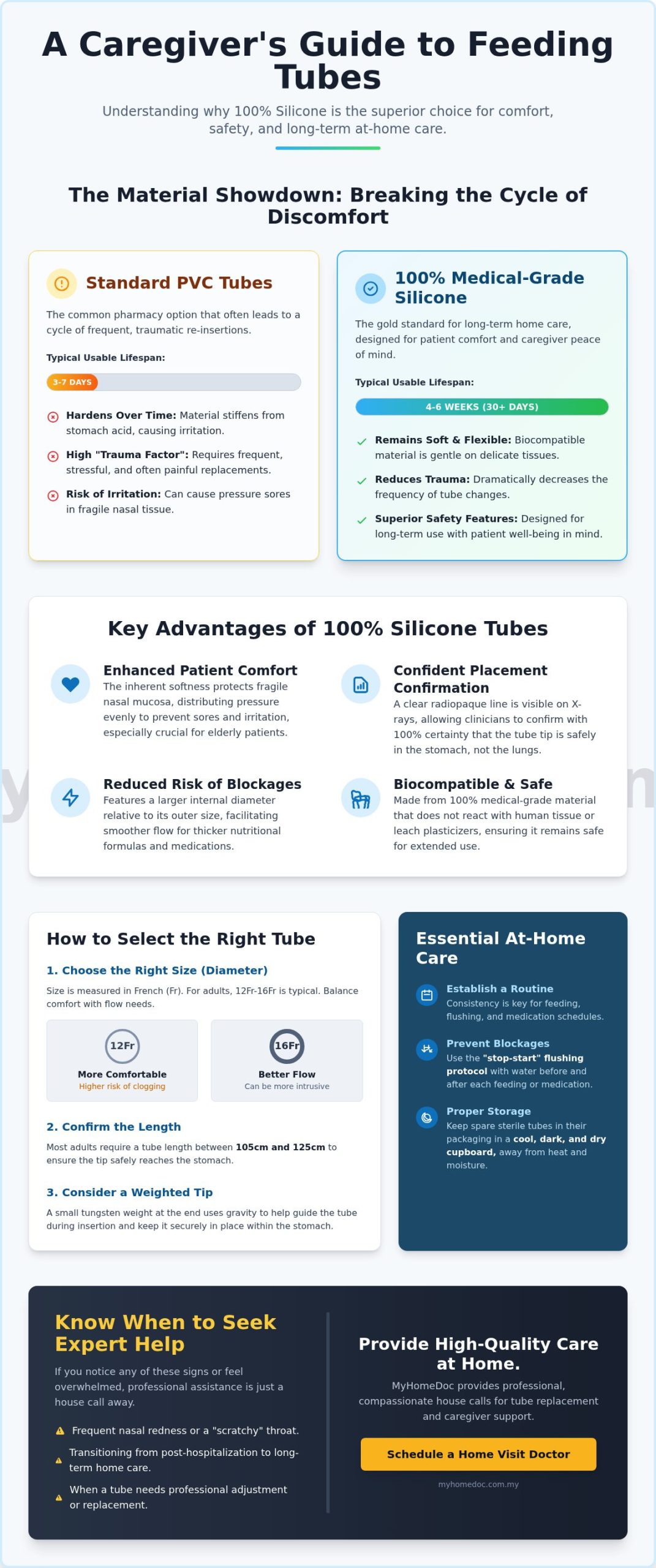
Choosing the right material for Nasogastric intubation isn’t just a technical decision. It’s a choice that directly impacts the daily comfort of your loved one. While many pharmacies in Malaysia stock standard PVC tubes, these are often temporary fixes that can lead to long-term discomfort. A 100% ryles tube silicone model offers a biocompatible alternative that doesn’t react with human tissue. Unlike PVC, which contains plasticizers that can leach out and cause the tube to harden, medical-grade silicone remains soft and flexible throughout its use.
The biggest hurdle in home feeding is the “Trauma Factor.” Every time a tube needs replacement, the patient undergoes a stressful and often painful re-insertion process. By choosing a 100% silicone option, you’re choosing to reduce these episodes significantly. Silicone’s superior chemical resistance allows it to withstand harsh gastric acids without degrading, which is why it outlasts other materials. Here is how the typical lifespans compare:
- Standard PVC: Typically 3 to 7 days. These stiffen quickly and require frequent, traumatic changes.
- Silicone-Coated: Usually 7 to 14 days. These are PVC tubes with a thin silicone layer, but they still lose flexibility over time.
- 100% Medical-Grade Silicone: Usually 4 to 6 weeks (up to 30 days or more depending on manufacturer guidelines). This is the gold standard for long-term home care.
The Benefits of 100% Silicone for Elderly Patients
Elderly patients often have fragile nasal mucosa, making them more susceptible to pressure sores and irritation. The inherent softness of a ryles tube silicone helps distribute pressure more evenly, protecting delicate tissues. These tubes also feature a clear radiopaque line. This X-ray opacity is vital because it allows healthcare professionals to confirm the tube’s position with absolute certainty, ensuring the tip is safely in the stomach rather than the lungs. Additionally, silicone tubes often have a larger internal diameter relative to their outer size, which facilitates a smoother flow for thicker nutritional formulas, reducing the risk of frustrating blockages during mealtime.
Selection Guide: Choosing the Right Silicone Ryle’s Tube
Selecting the correct size is the first step toward a successful home feeding routine. In Malaysia, adult patients typically require a French (Fr) size between 12Fr and 16Fr. This measurement refers to the outer diameter of the tube. While a 12Fr tube is thinner and often more comfortable for the patient, it’s more prone to clogging if you’re using thicker nutritional formulas or crushed medications. Conversely, a 16Fr tube provides better flow but might feel slightly more intrusive. Understanding these trade-offs helps you balance patient comfort with practical feeding needs.
Length matters just as much as width. Most adults require a tube length between 105cm and 125cm to ensure the tip reaches the stomach safely. You might also encounter a “weighted tip” version of the ryles tube silicone. These tubes contain a small tungsten weight at the end. This design uses gravity to help the tube pass through the esophagus more easily during insertion and helps it stay submerged in the gastric juices, preventing the tube from migrating upward. It’s a helpful feature for patients who have had difficulty with tube placement in the past.
Living in the Klang Valley means managing high humidity. Proper storage is essential for keeping your spare supplies sterile and safe. Always keep spare tubes in their original, sealed packaging within a cool, dark cupboard. Avoid areas like the kitchen or bathroom where heat and moisture can degrade the medical-grade material or compromise the sterile seal. Following a guide like Caring for your Nasogastric (NG) Tube can provide extra peace of mind when managing these supplies at home.
When to Upgrade to Silicone
If your loved one experiences frequent nasal redness or complains of a “scratchy” throat, they may be “tube-sensitive.” This is often the primary sign that it’s time to switch to a 100% ryles tube silicone. Many families make this transition when moving from acute post-hospitalization care to a more permanent home maintenance plan. If you’re feeling overwhelmed by these technical choices, you can always request a home visit doctor to get expert advice and a professional assessment in your own living room.
Professional Care and Troubleshooting at Home
Establishing a daily routine for your ryles tube silicone builds a foundation of safety and comfort. Start each morning by gently cleaning the skin around the nostril with warm water to prevent irritation or crusting. It’s vital to verify the tube’s position by checking the numerical markings at the entry point. If the marking has shifted even slightly, the tube may have displaced. Stop all feeding immediately if you notice movement to avoid serious safety risks. Consistency in these small checks provides peace of mind for families managing care at home.
To keep the line clear, use the “stop-start” flushing technique. By pulsing 30ml of water into the tube instead of one steady push, you create internal turbulence. This motion effectively sweeps away protein build-up and formula residue. Medication administration requires absolute precision. Incorrectly crushed pills are the leading cause of silicone tube failure. Always grind medications into a fine powder and ensure they dissolve fully in water. If you notice signs of aspiration, such as sudden coughing or shortness of breath, contact MyHomeDoc for a specialist house call immediately.
Managing Blockages and Complications
If you encounter resistance during a feed, don’t panic. You can often clear a clogged tube by using warm water and a gentle push-pull motion with a syringe. Never use a thin wire or excessive force, as this can puncture the soft silicone material. Proper anchoring is also essential to prevent “nasal wing” erosion. Change the adhesive tape regularly and slightly adjust the tube’s position to relieve pressure on the skin. For families who feel uncertain, utilizing professional home nursing services in Selangor provides a safe, clinical solution for tube maintenance without leaving your house.
Signs Your Ryle’s Tube Needs Immediate Replacement
A ryles tube silicone is built for durability, but it will eventually reach the end of its lifespan. Watch for visible cracks or a brittle, stiff texture in the material. A persistent foul odour or dark discolouration that remains after flushing often indicates biofilm or bacterial growth. Most critically, if the patient experiences persistent discomfort or coughing during feeding, the tube may have migrated. These are clear signals that you need a professional to assess and replace the tube to maintain a safe feeding environment for your loved one.
Empowering Your Home Care Journey
Transitioning to a ryles tube silicone is a significant step toward improving your loved one’s quality of life. You’ve learned how the right material reduces the trauma of frequent changes and how simple daily flushing protocols keep the system running smoothly. These small, proactive steps transform a complex medical task into a manageable part of your domestic routine. By focusing on biocompatible materials and precise maintenance, you’re prioritizing both clinical safety and personal comfort.
When you need professional support, our team is ready to bridge the gap between hospital-grade care and the comfort of your home. We specialize in elderly and palliative care, providing qualified GPs and nurses for home procedures across KL and Selangor. With 24/7 medical attention available, you’re never alone in this process. Our innovative caretaker approach ensures that every visit is efficient, transparent, and deeply rooted in human empathy.
Take the next step in securing a reliable care plan for your family. Book a Professional Nurse for Ryle’s Tube Replacement in KL & Selangor to ensure your loved one receives expert clinical attention without the stress of a hospital trip. You’ve got the knowledge to manage daily care, and we’re here to support you every step of the way.
Frequently Asked Questions
How long can a silicone Ryle’s tube stay in place?
A ryles tube silicone can typically stay in place for 30 days to six weeks depending on the specific manufacturer’s instructions. This is significantly longer than standard PVC tubes which often require replacement every week. The durable medical-grade material resists gastric acid, allowing your loved one to avoid the trauma of frequent re-insertions. Always check the packaging for the exact recommended duration for your specific model.
Is a silicone Ryle’s tube better than a PVC one for home care?
Yes, silicone is generally superior for long-term home care because it’s biocompatible and stays soft inside the body. PVC tubes contain plasticizers that can leach out over time, causing the tube to become stiff and irritating to the nasal passage. By choosing a 100% silicone option, you provide a much more comfortable experience for the patient and reduce the risk of internal tissue damage during extended feeding periods.
Can I change my parent’s Ryle’s tube myself at home?
No, you should never attempt to change or insert a feeding tube yourself at home. Incorrect placement can lead to the tube entering the lungs instead of the stomach, which is a life-threatening complication. A qualified nurse or doctor must perform the procedure to verify the correct position using clinical methods. Professional assistance ensures the process is safe, sterile, and as comfortable as possible for your parent.
What should I do if the silicone Ryle’s tube gets blocked?
If you encounter a blockage, try flushing the tube with 30ml of warm water using a gentle push-pull motion with a syringe. Avoid using thin wires or acidic liquids like fruit juices, as these can actually worsen the clog or damage the material. If the blockage doesn’t clear after a few attempts, it’s time to call for professional help. Preventing future clogs involves consistent flushing before and after every feed or medication dose.
Why is my parent’s nose sore from the feeding tube?
Soreness is usually caused by the tube pressing against the delicate nasal wing or internal mucosa. This often happens if the tube is anchored too tightly or if the adhesive tape hasn’t been changed recently. You can help by ensuring the tube is taped in a way that it doesn’t pull on the nostril. If the irritation persists despite proper anchoring, switching to a softer ryles tube silicone can provide much-needed relief for sensitive skin.
Where can I find a nurse to change a Ryle’s tube in Kuala Lumpur or Selangor?
You can access professional nursing care right in your living room through MyHomeDoc’s home nursing services in KL and Selangor. Our qualified nurses and GPs specialize in elderly care and are equipped to perform safe tube replacements and clinical assessments. This service eliminates the need for stressful hospital trips, allowing your loved one to receive expert care in a familiar, comfortable environment. We act as a reliable bridge between professional medicine and your daily well-being.